Categories
Society & Culture

On Muslim Marriage Demographics in the US

I think it's important for brothers and sisters to be aware of the statistics. For brothers, it should help them analyze their current circumstances and aspire towards realistic self improvement goals. For sisters, it should help them develop realistic standards.

Data pulled from Perplexity:

"Based on demographic calculations and distributions, out of approximately 4.5 million Muslims in the United States:

2,475,000 are men.

420,000 are aged between 25 and 35.

147,000 are unmarried.

20,600 earn over $100,000 annually.

12,400 are above 5'8".

7,440 are not obese.

When combining all these factors, the estimated number of unmarried, religious Muslim men aged 25-35 in the U.S., earning over $100k, above 5'8", and not obese is around 13,500.

From this group:

Approximately 2,025 would be considered highly attractive (rated 7+ out of 10), based on typical facial attractiveness distributions.

Of these, about 1,150 have abstained from premarital intercourse, based on reported abstinence rates (~57%).

Final Estimate:

There are approximately 1,150 highly attractive, unmarried, religious Muslim men aged 25-35 in the United States who earn over $100,000 annually, are taller than 5'8", not obese, and have not engaged in premarital intercourse.

This population represents an exceptionally small and selective segment within the overall U.S. Muslim demographic."

CONCLUSION:

If you adjust the height, age, facial attractiveness, physique, income, adjust for personality traits, hygiene habits, physical location, or ethnic origin – you will quickly drop to three digits.

If a sister is looking for a 6", 27 year old, 7/10, mildly athletic, $125k, confident, clean, Pakistani man, in the tristate area she may have less than 10 potential candidates. The likelihood of one of them being interested in her is probably less than 10%, meaning that it's possibly a zero chance.

Does this lead to sisters marrying brothers they're not genuinely attracted to when the pressure is high? Does it lead to reasonable expectations? Does mahr value make up for boxes not checked? Or should people just hold out indefinitely until their dream partner comes along?

Ali Shukri Amin

Originally posted by Ali Shukri Amin on Reddit. Read or join the discussion here: https://www.reddit.com/r/TraditionalMuslims/comments/1m18j0j/just_how_many_unmarried_attractive_muslim_men_are/

Categories
Society & Culture

The Privileged Are Subsidized by the Suffering of the Disadvantaged

There's a lot of discussion as to why young men are frustrated or tapping out of society. It doesn't seem that the issue is as complex as it's made out to be.

The barrier to entry of basic life goals has been raised to astronomical levels in an unfair way. Whether it's in the economy or job market, modern Western society unfairly subsidizes the already entrenched interests through the suffering of the disadvantaged.

Thesis: in terms of marriage and dating, if there were equal augmentation of partnership – it would destroy society. Therefore, partnership shouldn't be augmented at all.

Most people can agree that the state has taken over some of the roles traditionally played by men for women that are unpartnered, through welfare, social security, equal employment, no fault divorce, and alimony laws. A heterosexual woman no longer needs a man to survive or even thrive, she can obtain a degree, a six-figure salary – and if she fails the social safety net will catch her.

If the government mandated an equivalent augmentation of women's functions it would destroy society. Without the male drive to pursue women, society would fall rapidly to a bare minimum level of functionality and reproduction would almost disappear.

The equivalent augmentation of government welfare and workplace empowerment for women is AI-robotic wives. Involuntarily celibate and unpartnered men (60+% of young men in the US) would go to a welfare office and apply for such a robot if they couldn't afford it. After processing their application, they would receive a new $30,000 model of a device that uses AI for voice and cognition (as a partner) and Boston Dynamics style robotics/doll materials for augmenting pleasure.

The reason the dating or marriage market is so lopsided is due to government subsidies to women, a free-market unregulated approach ro sex, and Marxist gender-warfare. If we remove subsidies to the rich in this marketplace (women) and regulate out extreme disparities – we remove the gender war.

However, continuing to subsidize the rich at the expense of the poor leads to an unfairly rigged marketplace. If society is going to do that, it follows that it should be done fairly. The problem is that this kind of equality would doom any society that does it.

This is why young men are frustrated – they aren't given a fair shot or a reasonable opportunity to accomplish things like getting a good job, purchasing a house, and finding a suitable spouse. Even if they exert enormous effort, if they aren't born with a commensurate amount of enormous privilege then it could still be out of reach. This is abnormal in organized society where most men had an opportunity to achieve these things.


Originally posted by Ali Shukri Amin on Reddit. Read or join the discussion here: https://www.reddit.com/r/PurplePillDebate/comments/1gysm8r/the_privileged_are_subsidized_by_the_suffering_of/

Categories
Society & Culture

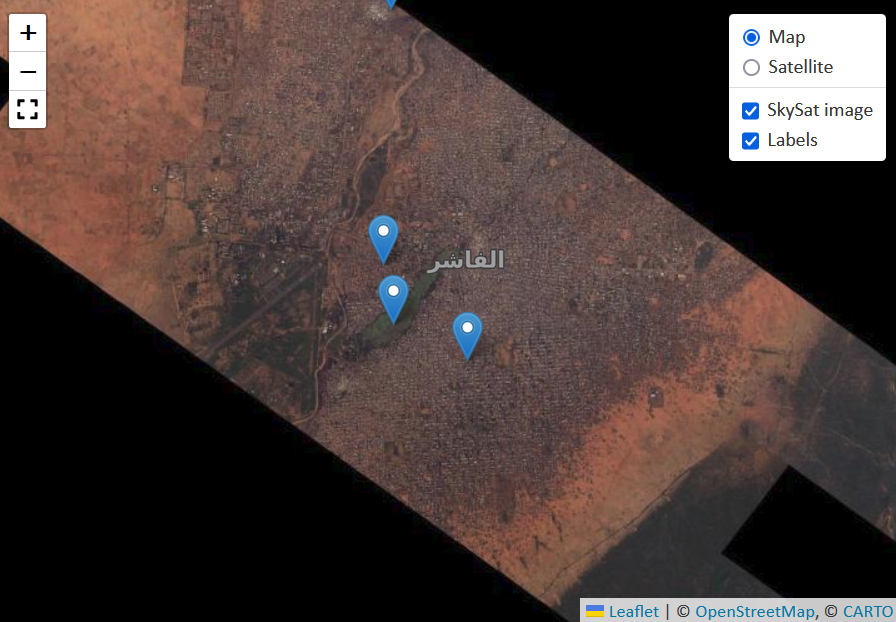
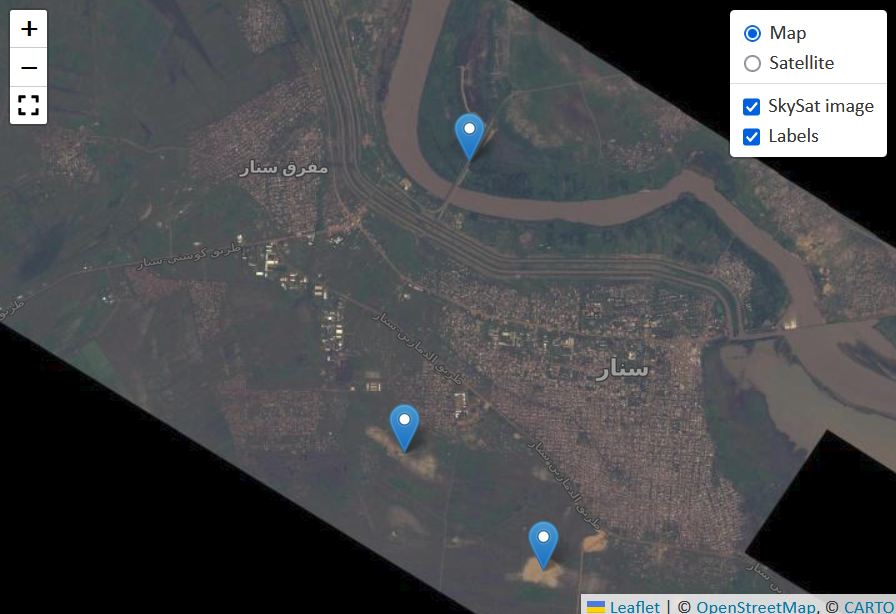
Sennar and Al Fashir in Sudan

SOURCE: https://www.bellingcat.com/resources/2024/10/11/from-mauritius-to-sudan-you-told-us-where-to-look-here-are-the-results

In recent months, fighting between the Rapid Support Forces (RSF) and Sudanese Armed Forces (SAF) has intensified in Sennar State in Sudan’s southeast. Initially a paramilitary force controlled by a faction of the Sudanese government, the Sudanese Armed Forces designated the RSF a rebel group after RSF attacks on government sites in April last year. Since then, the two forces have battled for control of the country.

@opalrose on Bellingcat’s public Discord server requested a tasking of the state capital city of Sennar.

In Planet Labs PBC SkySat imagery captured on August 31, the most noticeable features are agricultural flooding, a result of the unusually heavy rains that also caused a dam collapse in northwest Sudan.

North of Sennar City, what appears to be a checkpoint can be seen on Sennar Bridge.

SkySat imagery captured on August 31, 2024, by Planet Labs PBC.

Al Fashir is the largest city in the Darfur region and the last stronghold of the Sudanese Army in Darfur. Bellingcat previously reported on the fighting between the RSF and SAF and attacks on hospitals and the power station. Agricultural and urban flooding is also visible in the city, including around the market and residential areas of the Abou Shouk internally displaced refugee camp, an area where civilians have been targeted by the Rapid Support Forces.

While the satellite tasking captured the majority of the city, the northeastern part of Al Fashir is absent, where the Rapid Support Forces are keeping the city under siege and where civilians are heavily impacted.

Categories
Society & Culture

The Infinity Exhaustion Paradox: Rethinking Infinite Possibilities

The Infinite Monkey Theorem is a famous thought experiment in probability theory that suggests that given an infinite number of monkeys, typewriters, and time, one of those monkeys will eventually type out a complete work like Shakespeare’s Othello. In theory, every possible sequence of characters will eventually emerge because, with infinite resources, even the most improbable outcomes are guaranteed.

However, what if this assumption doesn’t hold up when we move from theoretical infinity to practical infinity?

The Infinity Exhaustion Paradox

In a theoretical run of infinite possibilities, every event, no matter how remote, is guaranteed to happen because infinity ensures that every outcome will be actualized. It’s a mathematical abstraction where probability and time are treated as limitless resources.

But in a real, actual run of infinite possibilities, it’s possible that some extremely remote possibilities may never occur. This is because certain outcomes might require an infinite amount of time to appear—even if infinite time is granted. For example, the monkey typing Othello might never actually happen in practice, as the time needed for such an event could itself stretch into infinity.

This presents a significant critique of the Infinite Monkey Theorem, which I call the “Infinity Exhaustion Paradox.” It suggests that even with infinite resources, certain rare outcomes may never manifest because they are infinitely improbable in any meaningful, practical sense.

Refuting the “Infinity Exhaustion Fallacy”

The “Infinity Exhaustion Paradox” can be seen as a counterpoint to the “Infinity Exhaustion Fallacy” often implied in theoretical discussions of probability. The fallacy assumes that infinite time and possibilities automatically lead to the actualization of all potential events. But the paradox highlights that even in infinite scenarios, some events could be so remote that they require an infinite amount of time to occur, making them practically impossible.

Theoretical vs. Actual Infinity

This distinction touches on deep areas of mathematics and philosophy, including set theory, modal realism, and the philosophy of probability. It’s similar to ideas in constructive mathematics, where the focus is on what can actually be realized, as opposed to abstract infinite assumptions.

In conclusion, the Infinity Exhaustion Paradox challenges the classical interpretation of infinite probability by introducing the possibility that even in an infinite world, certain outcomes may remain forever out of reach. If this concept has not yet been formally described, I propose this name to encapsulate the idea that infinite time may not guarantee the realization of all possibilities.


This post explores the nuances between theoretical and practical infinities and offers a potential framework for discussing the limits of infinite probability. Whether or not this idea has been explored in full, the “Infinity Exhaustion Paradox” presents an intriguing new angle on the Infinite Monkey Theorem.